Muscles in old age are not just a matter of sport or appearance. They are an important reserve for walking, standing up, recovering after illness and everyday independence. The good news is that loss of muscle strength and the risk of sarcopenia can be influenced at any age.
When we think of ageing, grey hair, wrinkles or poorer eyesight usually come to mind. Yet one of the most important changes happens more quietly: we gradually lose muscle strength. Our weight may hardly change and our clothes may fit just as well. Beneath the surface, however, the amount of active muscle tissue may decline and its quality may change.
That is why it is worth no longer thinking of muscles only as biceps or sporting performance. Muscles are metabolically active tissue, help us manage energy and, above all, create a functional reserve for everyday life. They determine whether we can get up from a chair unaided, carry our shopping, climb stairs or react quickly when we stumble.
Think of muscle strength as a savings account. When we are younger, we often draw on it without thinking. As the years pass, however, the reserve shrinks. Illness, injury or a few weeks of limited movement can then mean another substantial withdrawal.
Someone who enters such a situation with a good muscle reserve has more room for recovery. Someone already very weak before an illness may quickly approach the point where they need help with activities they used to manage automatically. Muscles are therefore no guarantee of longevity, but they can influence the condition in which we live our added years.
A more pronounced loss of muscle strength and tissue associated with ageing is called sarcopenia. Current professional criteria place great emphasis on muscle strength. It is not enough to ask how much muscle someone has. The more important question is: how well do their muscles function?
Professional assessments therefore use measures such as handgrip strength, repeated chair stands, walking speed or the Timed Up and Go test. A simple everyday activity can thus reveal more about functional fitness than a glance in the mirror alone.
There is no single cause. Muscle ageing is more like an interplay of several small changes that gradually add up.
The combination of low protein intake, prolonged sitting and periods of complete inactivity is particularly unfavourable. A cycle can easily develop: less movement leads to less strength, movement becomes more difficult, a person begins to avoid it and strength falls further.
When we stumble, we do not have several seconds to think. The body must generate enough force almost immediately. That is why strength, balance and coordination exercises matter alongside long walks. Weaker muscles reduce the ability to recover from a loss of balance; if osteoporosis is also present, the consequences of a fall can be more serious.
Skeletal muscle is one of the largest metabolically active systems in the body. It contributes to glucose use and, with regular activity, helps maintain metabolic fitness. Muscle also stores the body’s proteins and amino acids, which the body uses during increased demands or illness.
During contraction, muscle also releases signalling molecules called myokines. Movement is therefore more than the mechanical burning of energy. Every act of muscle work triggers a wider biological response and connects muscles with other tissues.
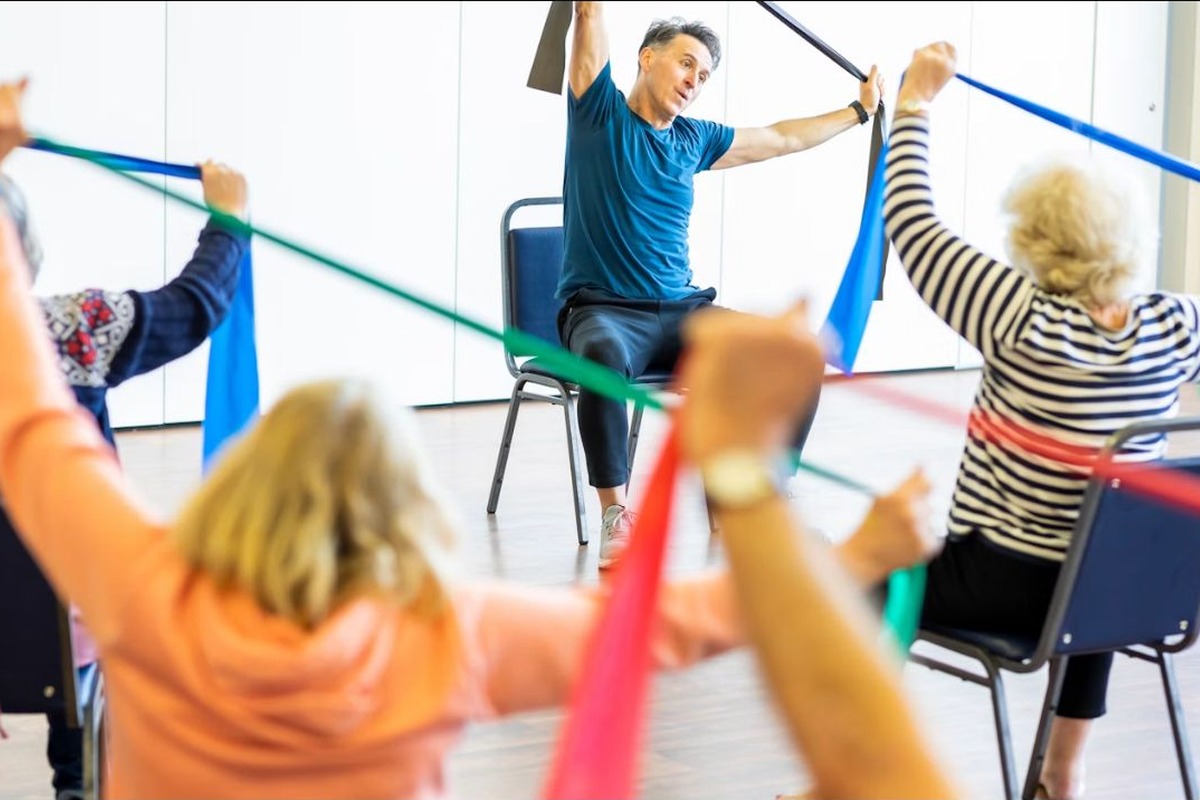
The most important message is this: older muscle does not lose its ability to adapt. The response may be slower than in youth, but regular, appropriately adjusted stimulation still makes sense in later life.
The World Health Organization recommends that older adults combine aerobic activity with strengthening the major muscle groups and movement focused on balance. If you have a chronic illness, pain, dizziness or are unsure about a suitable level of exertion, discuss starting exercise with a doctor or physiotherapist.

No food supplement replaces regular movement, adequate nutrition or a professional examination. When choosing a supplement, read the full ingredients, the amounts of active substances in the recommended daily dose, directions for use and warnings. Protein, vitamin D or other nutrient needs should be assessed according to diet, health and, where appropriate, laboratory results, rather than simply the name on the front of the packaging.
Try noticing a few ordinary situations: can you stand up from a chair without using your hands for support? Can you climb stairs without unusual breathlessness or uncertainty? Can you carry your usual shopping? Do you feel steady when walking? This is not a home diagnosis, but a useful indication of whether your functional fitness is changing.
New weakness, repeated falls, unintentional weight loss or a marked deterioration in performance should be assessed by a doctor. The earlier the cause is clarified, the better the next steps can be planned.
The aim of healthy ageing is not only to add years to life. It is just as important to add as much movement, independence and opportunity to do the things that matter to us as possible to those years.
Muscles alone cannot prevent every illness and are no magical insurance for longevity. They can, however, be one of the body’s most important reserves. We build it today, but often only recognise its real value in ten, twenty or thirty years.
Sarcopenia is the gradual loss of muscle strength, muscle mass and functional performance, associated especially with older age.
Yes. Older muscle also responds to regular, appropriately adjusted resistance exercise. Safety, a gradual increase in exertion and consistency are important.
Walking is very beneficial, but to maintain muscle strength it is advisable to add resistance exercises and movement focused on balance.
This article is educational and does not replace a medical examination, individual nutritional advice or guidance from a physiotherapist.