Bohuslav Větrovský on everyday self-care and what we can learn from the ingredients of INYANGA®.
Our phone wakes us in the morning. In the evening, it is one of the last things we put down. In between, we have dealt with several other people’s worries and postponed our own rest again. Until everything is done. Yet these days, “done” is very good at hiding.
Even when we finally sit down, our thoughts may return to what we did not manage to do, what we should have said differently and what awaits us tomorrow. We have a free moment, but we are not quite present in it yet. Perhaps it is worth noticing how we fill it. Do we reach for the phone again? Start planning the next day? Or do we allow ourselves a moment when nobody wants anything from us?
For me, this is where the question of self-care begins. As a natural medicine adviser, I am interested in what a person experiences and what their ordinary day looks like. Behind the wish “I need something to calm me down” may lie a long list of unfinished duties, care for loved ones or a working day that continues over dinner. Before we get to herbs, I want to understand these connections. They help us name what we actually expect from natural care.
Such expectations deserve attention. What would we like to change in our lives, and what are we willing to make room for? Preparing tea can be an opportunity to pause for a moment; a ready-made product may fit more easily into a daily routine. In both cases, it makes sense to know why we chose that form of care. From here, we can also get to know INYANGA® by NATURAMEDICIN, a food supplement whose ingredients combine plants and fungi.
At first glance, the number of ingredients may catch our attention. INYANGA contains eight extracts: six plant extracts and two fungal extracts. But when we say the individual names slowly, questions emerge that the number alone cannot answer. Leuzea, ginseng, astragalus, dandelion, tribulus and saffron are six different plants. Reishi and cordyceps are fungi. What exactly from these raw materials goes into the product?
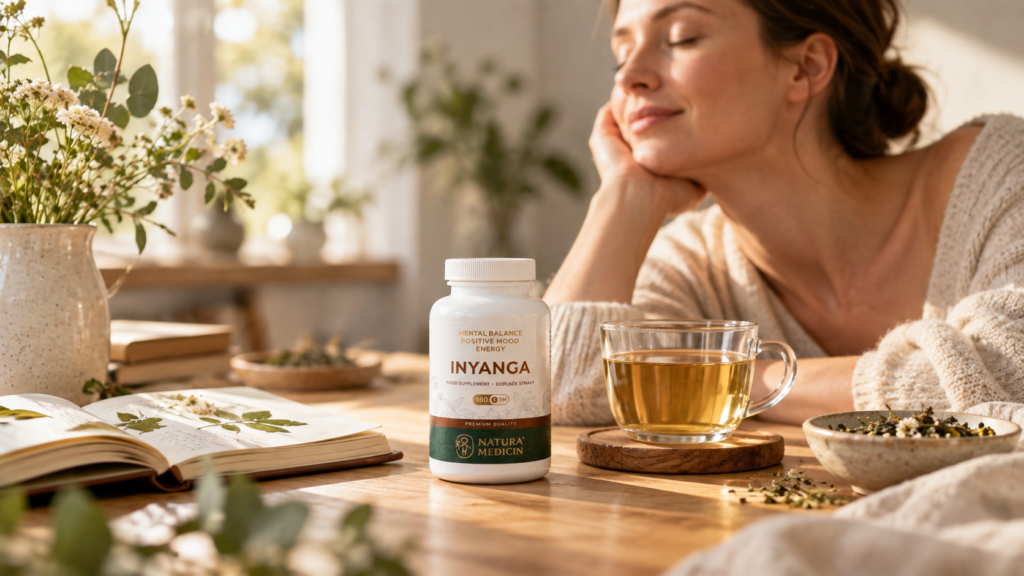
The answer starts with the part used. In INYANGA, leuzea, ginseng, astragalus and dandelion are represented by root extracts, and tribulus by a fruit extract. The fruiting body is used for reishi. A familiar name therefore marks only the beginning of the ingredient’s story. We readily picture dandelion as a yellow flower in a meadow, but in this product we work with its root. When we learn to notice details like these, the label becomes much more interesting reading.
Saffron may arouse a different kind of curiosity. Most of us know it from the kitchen as a precious spice. INYANGA lists an extract of cultivated saffron. The difference between a spice, a dried plant and an extract already leads us to another important question: what form does the material we actually use take?
When an extract is prepared, certain substances are obtained from the raw material. Its final form depends on the part used and the processing method, including the medium in which extraction takes place. The word “extract” therefore does not tell us everything on its own. Two products with the same plant in their names can differ. Besides the name, I am interested in how the manufacturer describes the material, how much extract is stated in the recommended dose and what other information is provided about it. These questions let us choose with greater understanding.
We need the same understanding when we read something interesting about an herb in research. Which preparation was used in the study, in what amount and in whom? The result applies to what the scientists actually studied. It cannot automatically be transferred to every product with the same ingredient, let alone an entire mixture. When we recognise this connection, we can follow new findings with interest while distinguishing more precisely what they tell us.
We then return to INYANGA with a more specific understanding: we know its eight extracts, notice the parts used and know what to ask when reading information. What remains is to relate that knowledge to our own lives. Does the capsule form suit us? Do we understand the recommended use? And is the product suitable for us in view of our health and any medicines? If uncertain, it is appropriate to seek advice, because natural substances can also interact with medicines. According to the label, INYANGA is not intended for children or adolescents, or for pregnant or breastfeeding women.
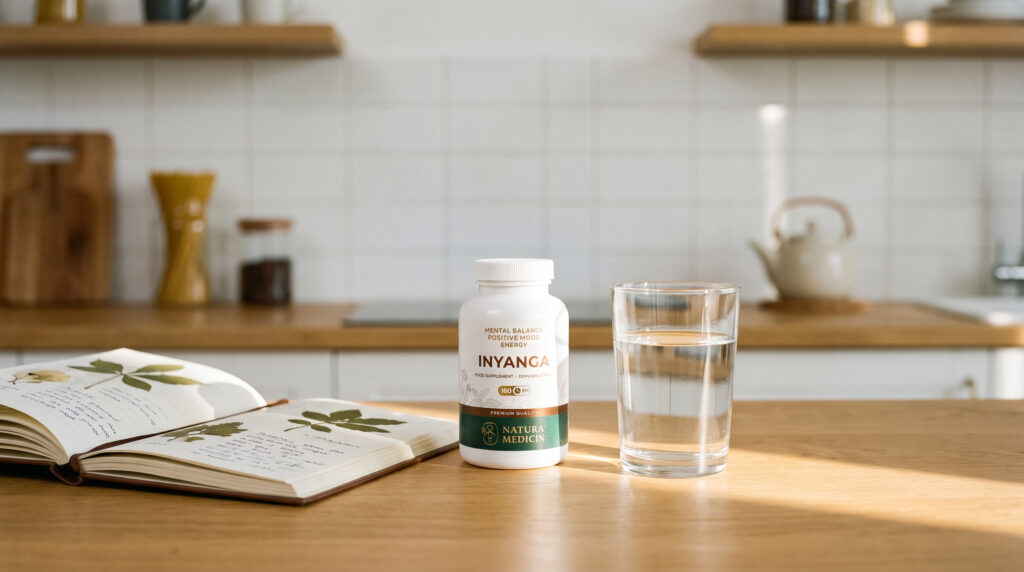
This brings us back to the person we started with. A varied diet, movement and rest belong in our thinking about everyday care just as much as the product we choose. I am interested in whether there is a real place for this care in our ordinary day. What does our evening look like? When do work duties end? What do we leave until everything else is finished?
We can look for an answer to one of these questions today. Notice one moment when we postpone rest again, and decide to handle it differently. We do not have to rebuild our whole life straight away. We can start by no longer leaving our own care only to whatever time is left over. And when we reach for the phone again, perhaps we will pause for a moment: what am I giving myself right now?
More about the ingredients and recommended use of INYANGA: naturamedicin.com/product/inyanga/